"It's an Investment, You Know": A Reality Check on Fine Jewellery and Money
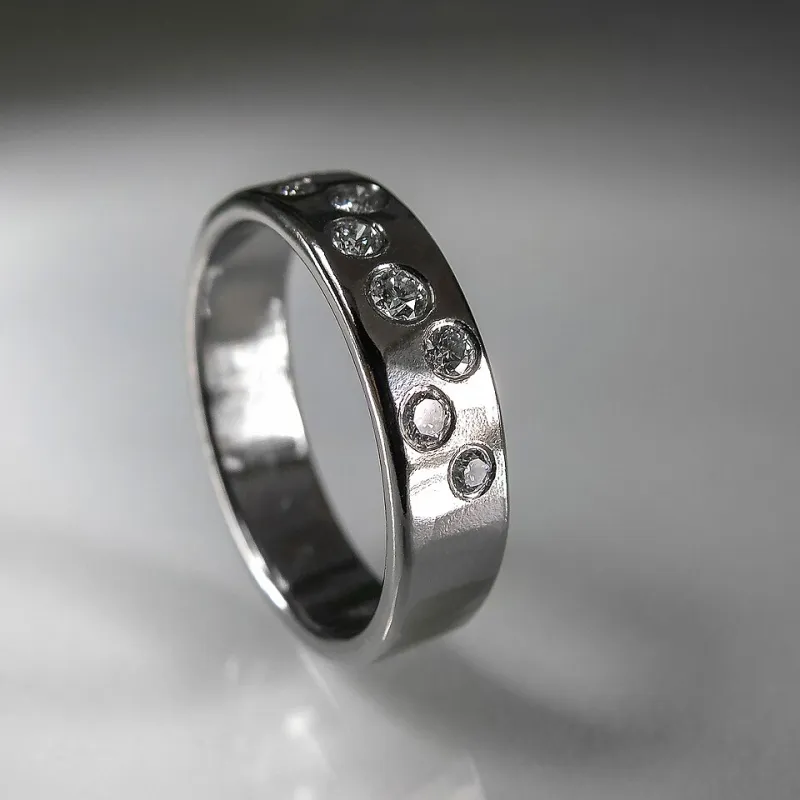
Photo: W.carter, CC BY-SA 4.0, via Wikimedia Commons
Every so often a headline appears claiming that diamonds beat the stock market, or that gold is the only safe place for your savings. Meanwhile, shop windows describe almost anything with a decent stone as an "investment piece", as if the phrase were a description of the metal rather than a marketing decision.
Time for a reality check. Not a gloomy one — just an honest one.
First, the uncomfortable bit: jewellery is a purchase, not a portfolio
Almost nobody buys a ring because of a spreadsheet, and that's exactly as it should be. The problem starts when the emotional language does the persuading and the financial language does the reassuring. A piece you love and wear is a wonderful thing to own. It is also, in the overwhelming majority of cases, a consumer purchase with a resale value well below what you paid.
Knowing that up front makes you a better buyer. It doesn't make the jewellery less lovely.
Where value genuinely sits: the metal, roughly
Gold, platinum and silver have a commodity value, and that value acts as a floor rather than a promise. It's easy, in a strong gold market, to feel clever about the heavy chain you bought years ago — but that's hindsight doing the talking. Scrap value also ignores the making charge, the design, the setting time and the VAT.
That last one matters more than people realise. New jewellery in the UK carries 20% VAT, and you don't get it back when you sell. So before the market has done anything at all, a new piece is already starting from behind. Metal content is the most dependable part of the equation, and it's still only a slice of the price on the ticket.
Diamonds: the gap between the window and the quote
Natural diamonds are where expectations and reality part company most often. Buy new at retail and you should expect a resale figure well under half what you paid, unless the stone is genuinely exceptional — large, well cut, high colour and clarity, and certificated by a recognised laboratory.
Quality and cut matter far more than total carat weight spread across a cluster. Signed mounts, old European and mine cuts, and fancy colours all behave differently from the standard brilliant in a plain band. If someone tells you a mid-range diamond is an appreciating asset, ask them what they'd pay for it back.
Lab-grown: fine to buy, wrong to label an investment
Let's be clear about the gems themselves: lab-grown diamonds are real diamonds. Same carbon, same hardness, same sparkle, and a fraction of the price. There is nothing wrong with choosing one, and plenty of people sensibly do.
But in market terms they are manufactured goods, and prices have fallen sharply as production has scaled up. Buy a lab-grown stone because it's beautiful, because it's affordable, because you like the provenance story — all excellent reasons. Just don't let anyone sell it to you as something that will hold or grow in value, because the evidence simply isn't there.
Names and signatures
Certain pieces from the great houses — Cartier, Van Cleef & Arpels, Bulgari, Tiffany — do trade at a premium second-hand. But only specific, collectable models, in good condition, ideally with box and papers. "Signed" isn't a magic word: a signed piece from an entry-level line is still an entry-level piece, and a heavily worn signed ring is still heavily worn.
What buying pre-owned really gives you
Second-hand is where a thoughtful buyer gains the most, because you sidestep the VAT hit entirely and let somebody else absorb the depreciation. You can often get considerably more stone for your money.
The trade-off is that you're buying without a manufacturer's warranty, sometimes without history, and with wear that may or may not have been properly addressed. So: check the hallmarks, ask whether it's been resized or repaired, ask for a condition report and a written valuation, and confirm the returns policy before you commit. A good pre-owned dealer will answer all of that without flinching.
Insurance is not an investment strategy
Insure the piece for what it would cost to replace, not for what you'd like it to be worth. A proper valuation is detailed, itemised and photographed, and your premium is a cost of ownership rather than a return. If the valuation looks flattering, it's probably wrong — and an over-inflated figure can cause problems at claim time.
For what it's worth, the tax system is quietly honest about all this: gains on personal possessions sold for relatively modest sums generally fall outside capital gains tax in the UK. Read into that what you will. (And do check with an accountant rather than a jeweller — this is jewellery talk, not financial advice.)
The checklist before you buy
- Buy the piece you want to wear, not the one that sounds like a hedge.
- Ask about the metal — carat, weight, and whether the hallmark is UK-struck.
- Ask about the stone's certificate and who issued it.
- Compare like with like. Price your choice against a comparable pre-owned piece before deciding.
- Ask the awkward question: "If I sold this back to you in a year, roughly what would it be worth?" The answer tells you a great deal about the seller.
- Don't stretch. Jewellery bought on a financial hope is jewellery you'll resent.
- Budget for insurance and maintenance from day one — re-tipping claws and restringing pearls is part of ownership.
- Buy from someone who will still be there in five years to look at it, clean it and tell you the truth.
The piece that actually earns its keep
Here's a better definition of an investment piece: the one you wear so often that the cost per wear becomes faintly ridiculous. A pair of gold hoops at £400 worn three hundred times has done more for you than a £4,000 ring that lives in a drawer because it doesn't suit your hands.
Buy something you'll love, understand what it can and can't do for your money, and you'll never be disappointed by a resale quote. You'll simply be wearing the thing you chose.