The Signet, Your Way: Choosing a Ring That Feels Like Yours
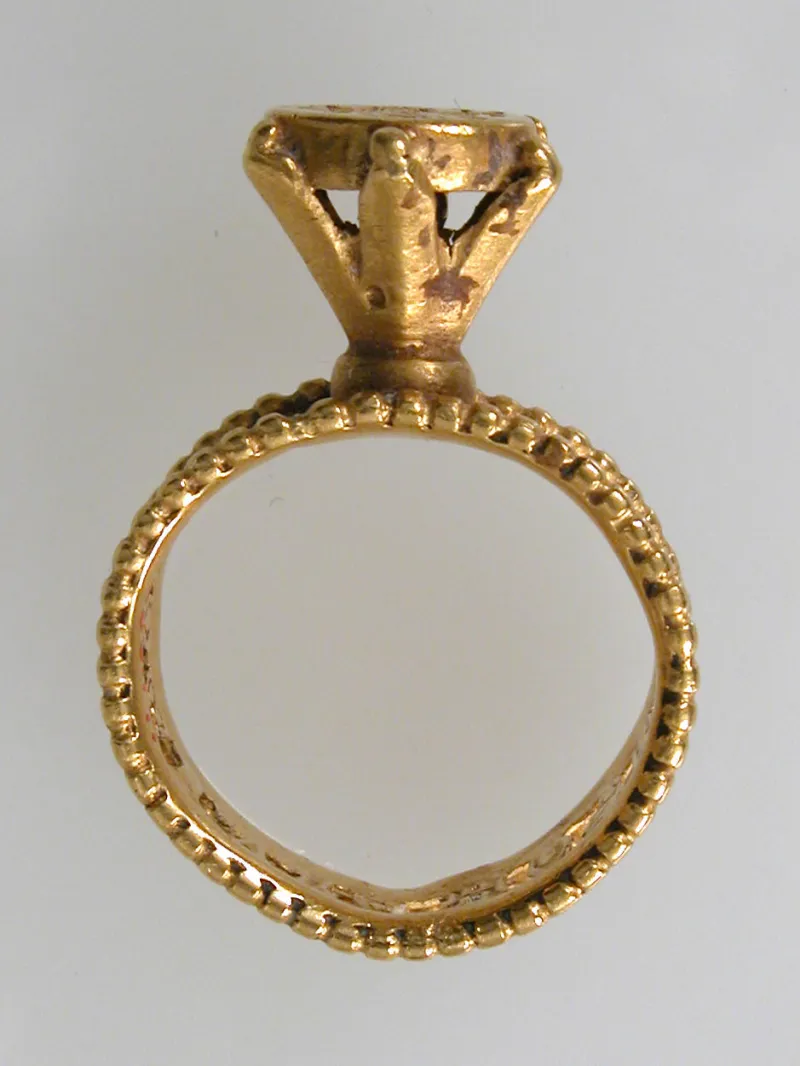
Photo: Unknown, CC0, via Wikimedia Commons
A signet ring used to mean something very specific. It said which family you came from, which school you survived, or which trade you practised, and it doubled as a working seal pressed into hot wax. These days it means something looser and, frankly, more interesting: it says you chose it. The catch is that a signet is a bold, flat, unmissable shape. Get it right and it looks like it has been on your hand for years. Get it wrong and it reads fancy dress. The difference comes down to a handful of decisions.
Start with what the face is actually for
The face is the flat oval, cushion or shield at the top of the ring, and everything else follows from it. Traditionally it carried an intaglio: a design engraved downwards so it sits below the surface and can stamp a mark. If you want that working-seal quality, an intaglio crest or monogram is the honest choice, with the letters cut in reverse so the impression reads correctly.
If you simply want a good-looking ring, you have more room. A plain brushed or hammered face is quietly modern and hides everyday scratches beautifully. A small flush-set stone gives you colour without fuss. A hand-engraved motif, a tiny star, a wave, a sprig of something, is personal without being a statement. What tends to look dated fastest is a large, shallow, machine-etched crest that has nothing to do with you.
Metals: warmth, weight and how they age
Yellow gold remains the classic for a reason. Nine-carat is the practical workhorse: harder, more affordable and happy to be worn daily. Eighteen-carat is richer in colour and softer under the polishing mop, which suits a ring that will be worn gently rather than relentlessly. White gold looks crisp and contemporary but needs re-rhodium plating every year or two to keep its bright finish, so factor that in. Platinum is the heaviest and most forgiving option, and if you want a ring that feels genuinely substantial on the hand, it is hard to beat.
Rose gold flatters warmer skin tones and feels less formal than yellow. Silver and gold vermeil are sensible entry points, though a vermeil signet will eventually show wear at the high points, which is fine if you like that patina and less fine if you do not.
Stones that can take a knock
Traditional signet stones were chosen for toughness as much as looks. Onyx, sardonyx, bloodstone, carnelian and lapis lazuli all handle daily life well, and they have centuries of formality behind them. A dark onyx in yellow gold is about as classic as it gets; carnelian gives you a warmer, softer look that suits a smaller face.
Be more cautious with the delicate end of the spectrum. Opal, pearl, turquoise and emerald are lovely in a ring that comes out for dinners, less so in one you wear to the gym, the garden or the washing-up bowl. Mother-of-pearl is beautiful but soft, and pavé diamonds on a signet face turn a workaday ring into an evening piece rather than the reverse.
Engraving: keep it readable and yours
Hand engraving has a softness and depth that laser work cannot quite copy, and a skilled seal engraver can cut a proper intaglio that works in wax. Laser engraving, by contrast, is sharper and cheaper, and better for very fine lettering. Either is legitimate; just be honest about which you are buying.
Good engraving ideas tend to be small and specific. Two or three initials in a clear serif. A date in Roman numerals. Map coordinates of a place that matters, kept short enough to read without squinting. A simple symbol with private meaning. Family crests are a slightly different matter: in the UK, heraldic arms belong to a person rather than a surname, so it is worth checking before you have one cut. A monogram or a personal motif sidesteps the question entirely.
Getting the fit right
This is where most signet purchases go wrong. A wide, flat-faced ring sits differently from a slim band, so UK sizing letters only tell part of the story. As a rule of thumb, go up half a size from your usual for a broad signet, and have your finger measured late in the day when it is at its largest. Knuckles matter too: a ring that slips over easily may spin, and one that needs a hard push may become uncomfortable in warm weather.
Face size should suit the hand. Roughly 9mm by 7mm reads as neat and unobtrusive, 11mm by 9mm is the middle ground most people land on, and anything from 13mm upwards is a deliberate statement. Try a few on rather than ordering blind, and check how the ring feels when your hand is closed.
Old or new?
Antique signets have a head start on character, with softened edges and worn intaglios that no new ring can imitate. Check the shank for thinness, look closely at the stone for chips or cracks, and remember that wide-shouldered signets are not always easy to resize. Buy from a dealer who offers returns, and look at antiques fairs, Portobello Road and reputable auction sales rather than gambling on a photograph.
New rings, meanwhile, let you specify everything. A bespoke signet typically takes four to eight weeks and gives you control over face shape, metal, stone and engraving, which is worth the wait if you have something particular in mind.
Wearing it, day and night
One signet is usually enough. Let it be the anchor and keep the rest of the hand quiet: a slim plain band on the other hand, a single chain, a watch. Signets do not stack gracefully, so resist the urge to pile them up.
Everyday, a signet works well with knitwear, a shirt cuff and a coat sleeve, and it looks better slightly worn than polished to a mirror. For smarter occasions, wear it alone. It gives a dinner suit or a simple dress a bit of backbone without asking for attention.
The practical bits nobody mentions
Check for a UK hallmark. Gold items over 1g, platinum over 0.5g and silver over 7.5g must be assayed, so look for the maker's mark, fineness mark and Assay Office symbol from London, Birmingham, Sheffield or Edinburgh. Take the ring off for the gym, gardening, swimming and heavy cleaning, and wipe it with a soft cloth rather than dunking it in cleaner, particularly if the stone is porous. Have the setting or bezel checked once a year, and store it in its own pouch so the face does not get scratched by other jewellery.
Choose slowly, engrave thoughtfully, and a signet stops being a period piece and becomes the thing you reach for without thinking. That is how heirlooms begin.