The Personal Stack: A Practical Guide to Rings That Earn Their Place
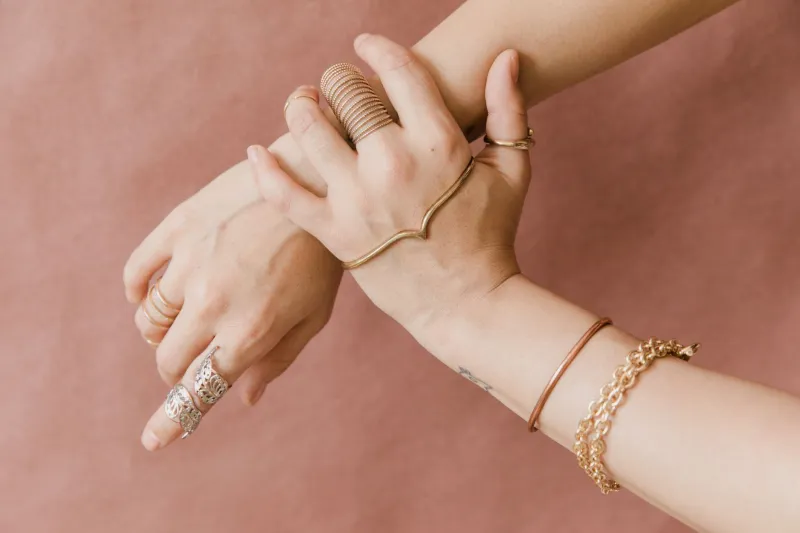
Ring stacks look brilliant on a mood board. Then real life arrives: you are typing, carrying a dog lead, washing your hands, pulling on a coat. The trick is to build a stack that feels personal and still works on a Tuesday in November. Think of it as a small collection you add to slowly, rather than a full set you buy in one go.
Start with the ring you actually reach for
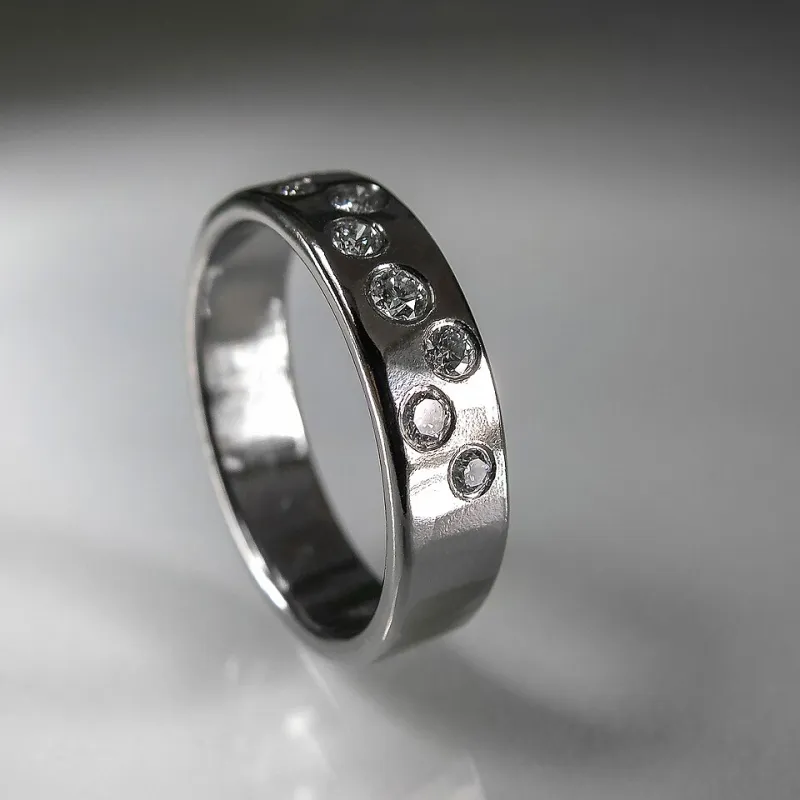
Before you think about the finished look, choose one ring you would wear on its own. A plain band, a low-set signet, a softly textured hoop or a slim ring with a single flush-set stone are all good starting points. Wear it for a week. Notice whether it catches on your sleeve, whether it feels comfortable under a keyboard, whether you keep twisting it around. That first ring is your anchor. Everything else should work around it, not fight it.
This is also the moment to get your size right. UK ring sizes are letters rather than numbers, and the jump from one letter to the next is small but real. Fingers change with temperature, time of day and the hand you use most. If you are between sizes, do not force a wide band to fit like a slim one: wider bands sit tighter. A jeweller can measure you properly, and it is worth asking about the specific finger you plan to stack on, not just your usual ring size.
Mix metals without looking like a cutlery drawer
Mixing metals is less about rules and more about repetition. Pick a dominant metal and let the other be an accent. If yellow gold is what you wear every day, a silver-toned band with texture can lift the group without taking over. Repeat that second metal somewhere else, even in a thin liner or a small stone setting, so it looks deliberate. Two metals are usually plenty for a daily stack; three can work, but it needs a light touch.
Skin tone is not a strict test. Warm, cool and neutral undertones can all carry yellow, white or rose metals. What matters more is how the metal wears over time. White gold is often rhodium-plated, and that plating can wear away with daily friction, revealing a warmer tone underneath. Rose gold can soften in colour depending on the alloy. Ask what the piece is made from, not just what it looks like under shop lights.
Proportions are about bands, not rings
A stack can fail simply because every ring is the same weight. Vary the widths. A 2mm plain band, a 3mm textured ring and a 1.5mm liner will look more considered than three chunky bands fighting for the same space. Leave a little breathing room between rings, especially if one has a stone. On shorter fingers, keep the total width modest so the stack does not swallow the finger. On longer fingers, you can carry more metal, but comfort still wins.
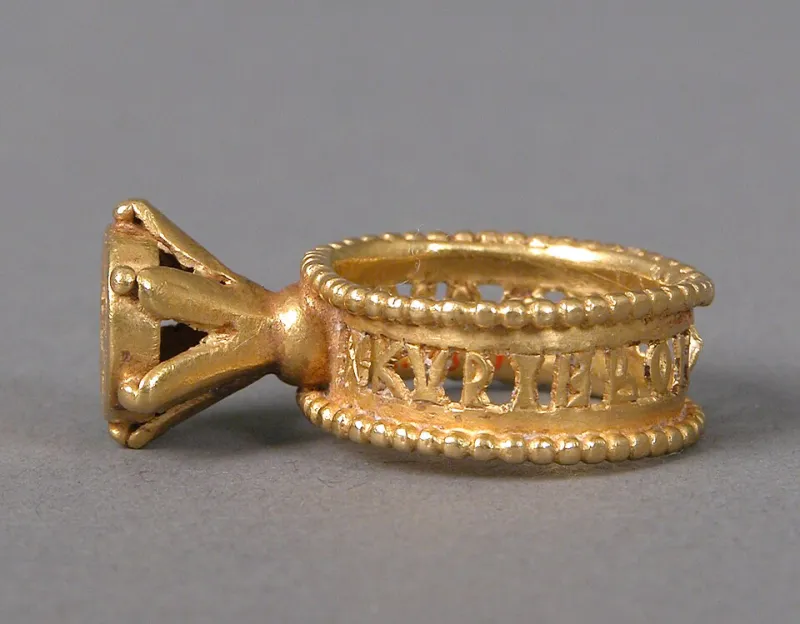
If you want stones in the stack, keep them low-set. Bezel settings, gypsy settings and flush-set diamonds are far more practical for everyday wear than tall claws that catch on knitwear. Save the high-profile pieces for evenings or for a different finger.
Stay clear of engagement-ring territory
There is nothing wrong with engagement rings, obviously. But a personal stack should not read as a second wedding set. Avoid a single large solitaire as the centre of the stack unless that is genuinely the look you want. Plain bands, signets, engraved rings, bezel-set stones and scattered pavé are all safer territory. If you are stacking on your ring finger, keep the mood deliberately different from a bridal set: mixed textures, uneven widths, a little negative space.
The real-life test
An office desk is a surprisingly tough environment. Keyboards, mouse pads, paper edges and desk drawers all create friction. High settings and sharp edges will find them. A dog walk brings wet hands, lead ropes and pockets. Neither situation means you need to baby your rings, but it does mean choosing pieces that can take a knock. Remove rings for heavy lifting, gym sessions and swimming, and dry your hands properly after washing. Hand cream and sanitiser are part of life, but wipe your rings after use rather than letting product build up around settings.
Store rings separately or in a soft travel case so they do not scratch each other. If you are wearing a stack daily, check the settings and claws every few months. A quick check is cheaper than replacing a stone.
UK sizing quirks worth knowing
UK letter sizing is not uniform across every jeweller, especially with wider bands and comfort-fit profiles. If you are buying online, check the returns and resizing policy before you commit. A ring that fits in July may feel tighter in January, and a stack that feels fine in the morning can feel different after a long walk. If you are adding to an existing stack, bring the rings with you when you are measured. The fit of the whole group matters, not just one band.
Build it slowly, and let it mean something
A ring stack is at its best when it looks collected rather than purchased in one afternoon. Add a ring for a birthday, a trip, a milestone or simply because you have worn the same three for a year and fancy a change. Set a budget you are happy with, consider pre-owned pieces if you like the idea of something with history, and keep receipts and valuations for insurance. The result should feel like a diary on your hand, not a haul from a lookbook.